
How RIVA’s AI Advances Safety, Precision, and Efficiency in Robotic Compounding

Hospital pharmacies are navigating growing demand, tighter staffing models, and zero-tolerance expectations for accuracy.
It is the foundation for safe, repeatable medication preparation that stand up to clinical scrutiny. Automation is no longer a nice-to-have.
That reality is reflected in the scale at which automation must now perform. With more than nineteen million doses prepared in USP <797>‑compliant environments worldwide, ARxIUM’s flagship pharmacy solution, RIVA® Robotic IV Automation, continues to demonstrate what is possible when intelligence, precision, and repeatability are built into every step of IV preparation.*
RIVA is a robotic IV automation and compounding system designed for modern pharmacy operations. Operating within a closed, ISO Class 5 aseptic environment**, RIVA supports USP <797> guidance for sterile compounding when used in accordance with established procedures and user instructions. Its integrated intelligent automation supports safe, efficient, and highly standardized dose preparation. Instead of relying solely on manual processes, RIVA uses structured decision logic, advanced sensing, and controlled workflows to maintain precision and sterility for every dose, even under sustained production demands.

A Trusted AI Logic Layer for Safe + Predictable Compounding
Consistency is not an accident. At the scale of millions of compounded doses, safety depends on predictability.
RIVA operates using a proprietary rule-based logic layer built on an Action Description Language (ADL) framework. This logic layer evaluates a wide range of workflow scenarios before and during each compounding task. Every process begins with an optimal sequence while remaining prepared to respond correctly if conditions change.
This approach aligns with methods rooted in symbolic artificial intelligence, where tasks, preconditions, and outcomes are represented as explicit rules and state transitions. Because each action and response is defined in advance, outcomes remain predictable, verifiable, and auditable.
For example, if a syringe does not pass a gravimetric weight check, RIVA can immediately label and isolate the syringe, route it to the reject bin, request additional inventory, and resume the workflow without compromising accuracy or sterility. Production continues while quality and compliance remain intact.***
This level of controlled automation is one of the reasons RIVA has been able to support compounding operations at a scale exceeding nineteen million doses prepared in USP <797>-compliant environments.
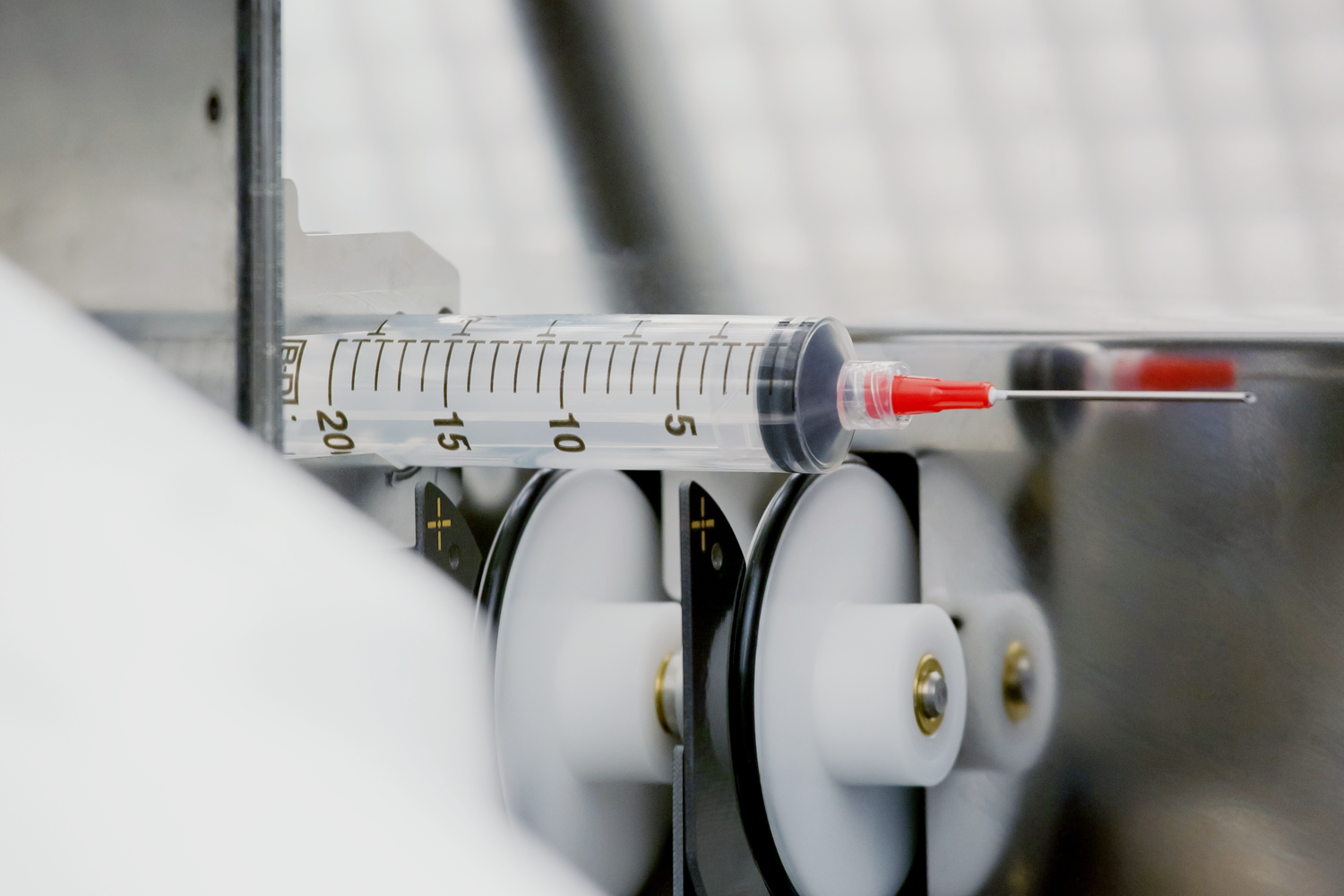
AI Vision Enhancing Precision + Consistency in Bevel Alignment
Accuracy in sterile compounding depends on precise, repeatable movements, particularly during needle handling. Even small deviations can introduce risk when multiplied across high volume production.
RIVA’s bevel alignment process uses an AI driven vision system to identify the shape and characteristics of a needle bevel and determine its exact orientation. Using only two images and a custom bevel ratio algorithm, the system calculates the needle’s position and performs a final rotation to achieve precise alignment.
One way to visualize this process is to imagine determining which direction a person is facing by looking only at their shadow.
If the person faces directly left or right, the orientation is clear.
If they face forward or backward, the shadow provides limited information.
Once the person turns ninety degrees, their profile reveals direction. By referencing two data points, orientation becomes clear.
RIVA applies this same principle. By using minimal visual information, the system determines needle orientation with a high degree of accuracy. This precision supports safer, more consistent dose preparation and reduces variability during critical compounding steps.
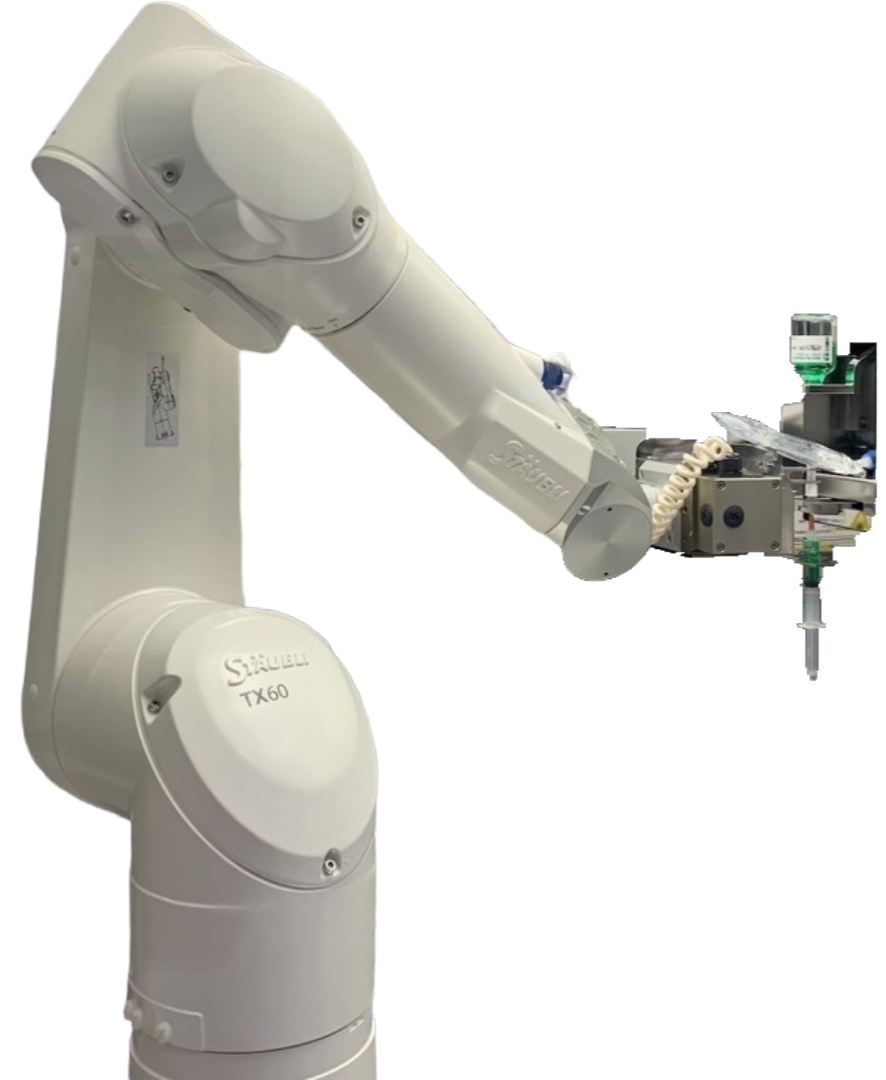
Why Intelligent Automation Matters in Medication Safety
Medication errors remain one of the most serious and preventable threats to patient safety.
According to the U.S. Food and Drug Administration (FDA), the agency receives more than 100,000 reports of suspected medication errors annually.^ These errors can occur at any stage; from prescribing and dispensing to administration and monitoring, and may result in adverse drug events, hospitalizations, or even fatalities.
The World Health Organization (WHO) reports that half of all preventable harm in medical care is medication-related, and a quarter of that is severe or life-threatening. Globally, medication errors are estimated to cost forty two billion dollars annually, driven by factors such as workflow complexity, inadequate safeguards, fatigue, and staffing shortages.^^
These realities reinforce the need for technologies that reduce reliance on manual processes and embed verification and traceability directly into the medication preparation workflow.
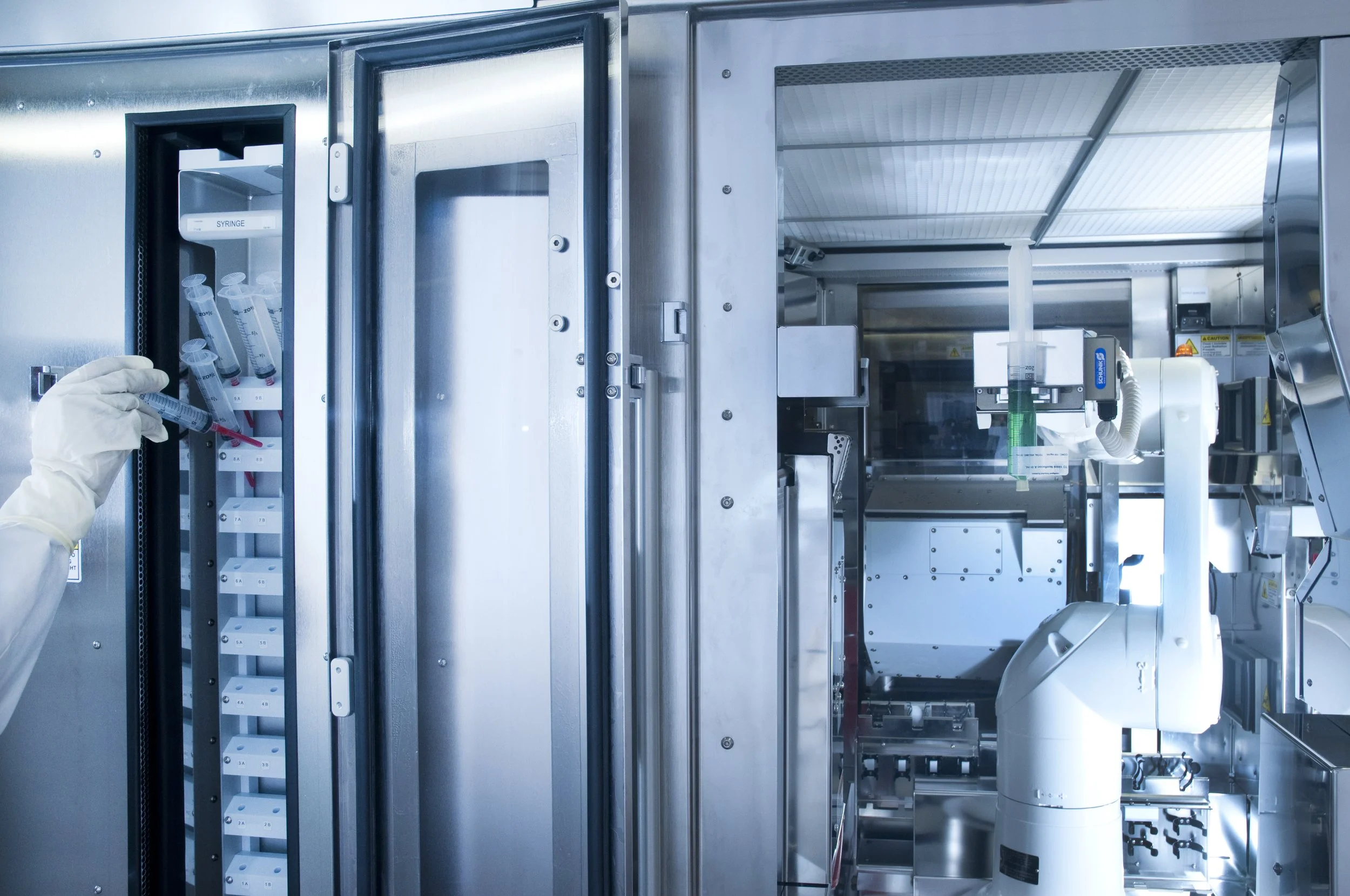
Supporting Pharmacy Teams with RIVA’s Intelligent Automation
As demands on hospital pharmacies continue to grow, the use of AI in robotic IV automation and compounding systems has become a necessary advancement to ensure safe and reliable medication preparation at scale.
For RIVA, embedding intelligence into each critical step of the compounding process helps pharmacy teams:
Reduce variability
Strengthen safety
Improve operational efficiency
Support regulatory compliance
Free staff to focus on clinical priorities
Proven at Scale + Built for What Comes Next
Reaching more than nineteen million sterile doses safely compounded represents more than operational scale. It reflects what is possible when pharmacy automation is designed with intelligence, accountability, and patient safety at its core.
RIVA’s use of structured decision logic, AI driven vision, and controlled workflows enables pharmacy teams to deliver consistent outcomes under real world pressures. As demand grows and expectations for safety and precision continue to rise, systems that can perform reliably at scale become essential.
RIVA shows how intelligent robotic automation can help hospital pharmacies reduce variability, strengthen safety, and position their operations for the future. This milestone signals not an endpoint, but a foundation for continued innovation in sterile compounding and medication preparation.
Key Questions About RIVA + Robotic IV Compounding
-
Robotic IV compounding is the automated preparation of intravenous medications using controlled robotic systems that improve accuracy, sterility, and consistency while reducing reliance on manual processes.
-
Robotic IV compounding improves safety by standardizing preparation steps, verifying dose accuracy, reducing manual handling, and documenting every action to minimize variability and human error.
-
AI improves safety by enforcing defined workflows, evaluating preconditions for each task, monitoring outcomes in real time, and automatically responding to exceptions without compromising sterility or accuracy.
-
RIVA replaces manual variability with structured, repeatable workflows driven by robotic automation and AI based logic, enabling consistent compounding outcomes even under high volume demand.
-
RIVA has safely compounded more than nineteen million sterile doses worldwide, demonstrating reliable accuracy, controlled workflows, and consistent sterility across diverse pharmacy environments.
-
RIVA uses a rule based AI logic layer to define actions, preconditions, and outcomes for each compounding step, ensuring predictable workflows and verifiable results.
-
Gravimetric verification confirms that each prepared dose meets defined weight parameters, helping ensure dosing accuracy and identify deviations before a medication reaches a patient.
-
Hospital pharmacies, health systems, pediatric and oncology centers, and high volume sterile compounding operations benefit from improved safety, efficiency, and consistency.
-
RIVA provides full electronic documentation and audit trails for every dose, supporting traceability, quality assurance, and compliance requirements.
-
By embedding verification, documentation, and controlled workflows directly into preparation, robotic compounding reduces reliance on manual checks that can lead to errors.
References
* United States Pharmacopeia (USP)
General Chapter <797>: Pharmaceutical Compounding – Sterile Preparations.
https://www.usp.org/compounding/general-chapter-797** International Organization for Standardization (ISO)
ISO 14644‑1:2015 Cleanrooms and associated controlled environments – Classification of air cleanliness by particle concentration.
https://www.iso.org/standard/53394.html*** Institute for Safe Medication Practices (ISMP)
Guidelines for Sterile Compounding and the Safe Use of Sterile Compounding Technology.
https://www.ismp.org/resources/guidelines-sterile-compounding-and-safe-use-sterile-compounding-technology^ U.S. Food and Drug Administration (FDA)
Medication Errors.
https://www.fda.gov/drugs/drug-safety-and-availability/medication-errors^^ World Health Organization (WHO)
Medication Without Harm: Global Patient Safety Challenge.
https://www.who.int/initiatives/medication-without-harm